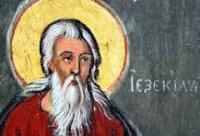
The prophet Ezekiel lived in the sixth century BC. He was attached to the Temple staff and was exiled to Babylon when Jerusalem fell in 597 BC. God appointed him as sentry or watchman for the people of Israel (Ez. 3:17). If a sentry fails to blow his trumpet to warn people of danger he is responsible for their blood (Ez. 33:1-9). This is the theme of the liturgy today.
It is generally assumed that the gospel of Matthew was written in Antioch by a Syrian. It is the most Jewish of the gospels, written for a mixed community of Jews and Gentiles in about 80 AD. The temple had been destroyed and the Christian community had been ejected from the synagogue, because they proclaimed Jesus as the fulfilment of the Torah.
Matthew’s community would have been very mindful of the Law. Those who sinned against it had been subject to severe punishment. We are well aware these days of the damage recent scandals have done to our church. People forget how much goodness there is there in contrast to the evil. In the past people were burnt at the stake for heresy. Hester Prynne, in Nathaniel Hawthorne’s Scarlet Letter, was pilloried by those who considered themselves virtuous, for having a child out of wedlock. We are all sinners and pointing the finger at someone else should be a last resort: “You hypocrite, first take the plank out of your own eye and then you will see clearly to remove the speck from your brother’s eye” (Matt.7:5).
We should be mindful of how Christ treated sinners. He received them with love, giving them the motivation to reform.