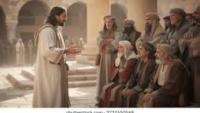
Jesus has made a triumphal entrance to Jerusalem, hailed by the crowds (Matt. 21:1-10). He has also cleansed the temple, throwing out the money-changers and traders (Matt. 21:12-17). The children sing songs of praise (Matt 21:5-16). The chief priests and elders, which probably included Sadducees, Pharisees and others as well, challenge him about his authority (Matt .21:24-27).
The parable of the fig tree (Matt. 24:33-35) describes the sterility of the leadership of Israel. Jesus cursed the tree because it bore no fruit, though it had leaves, and therefore was not fulfilling its purpose. It was an image of the chosen people, who likewise were not following God’s plan.
Jesus loved the chief priests and elders and wanted the best for them. He told three parables hoping to give them a picture of where their actions were leading. Today’s parable is of the two sons, whom the father asks to work in the vineyard. Often the vineyard is used as a symbol of Israel: “The vineyard of the Lord is the House of Israel" (Is. 5:1-7). The first son represents the sinners who break the law but then, listening to John the Baptist, are moved to repentance. The second son stands for the leaders of Israel who feel that, by presenting a façade of righteousness in adhering strictly to the law, they can obtain God’s favour without doing his will.
Jesus went on to tell the stories of the wicked tenants (Matt 24:33-42) and and the wedding feast (21:1-15). If the leaders of Israel, especially the Pharisees, could be persuaded to listen to Jesus, the Word of God, they could do wonderful things for him, as the Pharisee Paul would do later. Most of them, however, liked the status quo and did not want to leave their comfort zone.