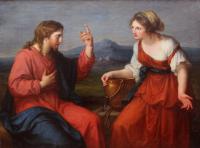
St John’s gospel is remarkable in many ways but especially for highlighting Jesus’s dialogue with women, sometimes exploring deep theological concepts. The longest is with the woman at the well. The encounter is startling. Jews and Samaritans hated one another. The bad blood between them went back centuries, to the Assyrian conquest of the Northern Kingdom of Israel. The Judeans regarded them as half breeds and apostates. Yet Jesus, a faithful Jew, asked the woman for a drink.
The woman may have been an outcast from her community for she came to the well alone at midday, when it would have been very hot. Normally women would come together to draw water at a cooler part of the day, morning or evening. It was a social event, where they could chat together and exchange news. In spite of her being a despised Samaritan and possibly living an immoral life, Jesus treated her with the utmost respect. He also gently drew her from her practical concerns about a bucket to an understanding of who he might be. He honoured her by sending her as an apostle to her own people.
God, throughout history, chooses people with potential, regardless of their virtue. Jacob cheated Esau of his birthright, yet he became one of the great patriarchs. Paul mercilessly persecuted the early Christians, yet he was chosen to be apostle of the gentiles. Ignatius of Loyola was a bit of a playboy, yet he became the founder of the Society of Jesus. The Lord saw in the woman, who had had five husbands and was living outside of marriage with another man, someone who was capable of speaking about him to her own people. He sees potential in each one of us as well.