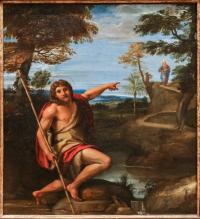
After the Christmas stories have been told, the revelation of Jesus and who he is continues in Matthew’s gospel as he appears in in his adult life. The Johannine writings describe him as the Lamb of God. This phrase, used by John the Baptist, encapsulates the mission of Jesus as Saviour. Throughout the Old Testament, sacrifice for sin was offered to God but it was imperfect. When Moses led The Israelites out of Egypt the Passover became an important feast for the Jews. Lambs were slaughtered for the commemorative meal. Jesus ate the Passover meal with his disciples and the next day he died as the lambs had done, but he was the perfect sacrifice for sin, which never needs to be repeated.
In the Apocalypse the Lamb is mentioned 28 times. A Lamb “looking as if it had been slain” stands in the centre of the throne, and only he can open the scrolls (Apoc. 5). Chapter 19 tells of the invitation to the marriage supper of the Lamb, a symbolic union of Christ and his people. At the end of the book, the temple is now God and the Lamb (Apoc. 21:22) and the holy city of Jerusalem needs no light because the Lamb is its lamp (Apoc. 21:23). This marks the fulfilment of God’s plan of salvation, accomplished by the Lamb.