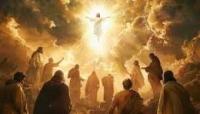
The Ascension of the Lord forms the hinge between the Gospel of Luke and the Acts of the Apostles. The Gospel recounts the life of Jesus on earth, while Acts is an account of the early church. Luke has the longest account of the Ascension in Acts; and Matthew’s gospel, though very different, complements it. Luke describes the Ascension in symbolic language. In many mythologies the home of the gods has a location: Asgard for the Norse deities, Olympus for the Greeks. However, God is present everywhere; he is not reigning in solitude in the sky but is present with his people. The cloud, an image often used in the Old Testament for the presence of God, describes in Acts Jesus’ return to the Father.
The disciples were still not clear about Jesus’ real mission. They still thought the Messiah would restore the Kingdom of Israel. However, Jesus’ commands in Matthew’s account had given a clear indication of where their future lay. The Holy Spirit would clarify what Jesus had told them.
The disciples had a very sorrowful parting from the Lord at the Last Supper. Now, however, we are told that they went back to Jerusalem rejoicing. Though they were still confused about the direction they were going, they must have had faith in Jesus’ word that he would be with them till the end of time. He is with us too, just as much as he was with them.